
4: LMI and the Employability Dimensions
When clients have a need for LMI, they have a particular question or set of questions they are seeking answers for. When there is clarity as to what these specific questions are, there is a greater opportunity for helping the client access targeted, and relevant LMI tailored specifically to their questions.
The driver of LMI is client need. A client who is unsure of their direction and focused on Career Exploration, for example, will typically have different needs and questions from a client who is struggling with Job Search. The Employability Dimensions are a useful framework for clarifying client needs and priorities for LMI.
LMI by Itself vs. LMI in Context
LMI alone is a collection of information.
LMI in context is what makes information relevant to the individual.
LMI by Itself
By itself, LMI is a variety of information on occupations, industries, sectors, education and the labour market.
When using LMI by itself, you may find yourself:
- Scanning wage statistics to identify high paying occupations without any sense of fit with values, interests or strengths
- Identifying high growth occupations without considering that the client wants to remain in their home community
- Identifying the most in-demand skills without consideration for the client’s aptitude for those skills or interest in the associated jobs

LMI in Context
LMI in a career development context connects directly with a client’s specific needs for information. It is no longer neutral LMI; it becomes relevant and personal LMI.
When using LMI in the client’s context:
- Salary data becomes a meaningful input to compare to a client’s cost of living needs
- Job outlooks become relevant to a client’s location and career goals
- Skills lists become personal when matched to a client’s strengths and gaps

LMI in context is where the Employability Dimensions and the 8 Forces intersect.
The 8 Forces shape what is happening in the labour market.
The Employability Dimensions shape what the client needs to know about what is happening in the labour market.
Targeted LMI based on clients’ needs connects the two.
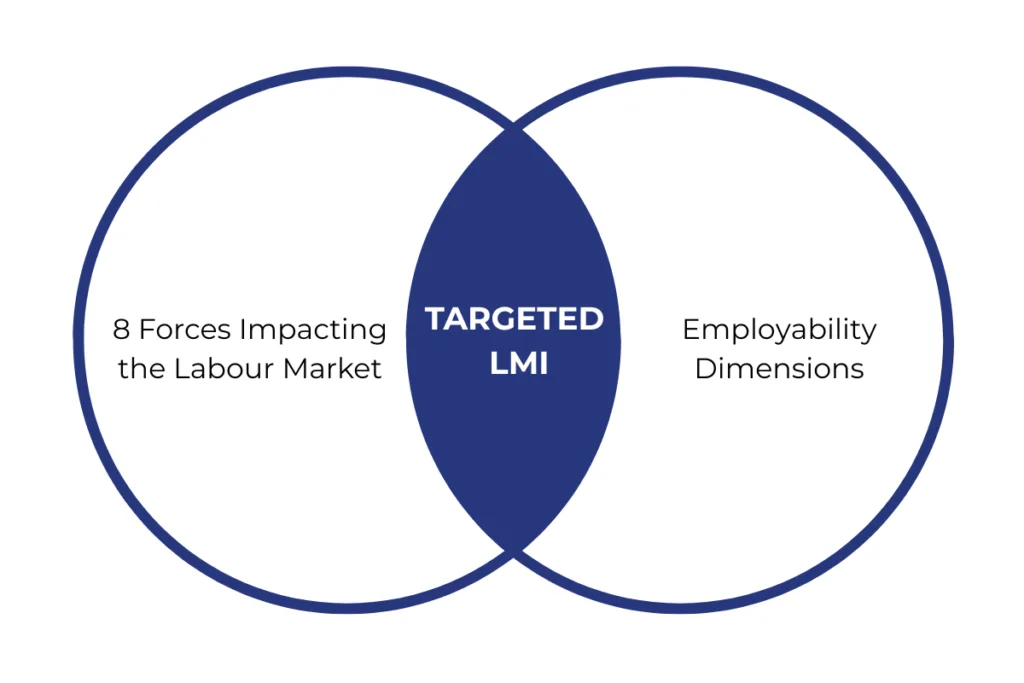
This intersection is how LMI becomes individually meaningful.
LMI and the Individual
Individuals make career decisions within a complex web of influences. People continually respond to external influences such as family expectations, cultural norms, local economic conditions, and community resources. They also operate within mitigating contexts: the realities that shape what is possible or accessible for them, including education level, financial capacity, social identities, health, and geographic location.
At key moments, decision triggers – such as a layoff, graduation, a major life transition, or even an insight about personal values – prompt individuals to reassess their direction and consider new pathways. These elements interact dynamically, shaping how clients interpret their situation and what they perceive as viable options.
Within this context, LMI becomes far more than a collection of facts; it becomes a sense-making tool that helps clients navigate change. LMI can assist clients in framing or reframing their circumstances by providing context for what they are experiencing: confirming whether a challenge is personal, structural, or rooted in larger labour market forces. It can reveal new possibilities by expanding awareness of roles, pathways, and sectors they may never have considered. It also helps clarify next steps, offering concrete guidance on skills required, training routes, or job search strategies that align with their goals and constraints.
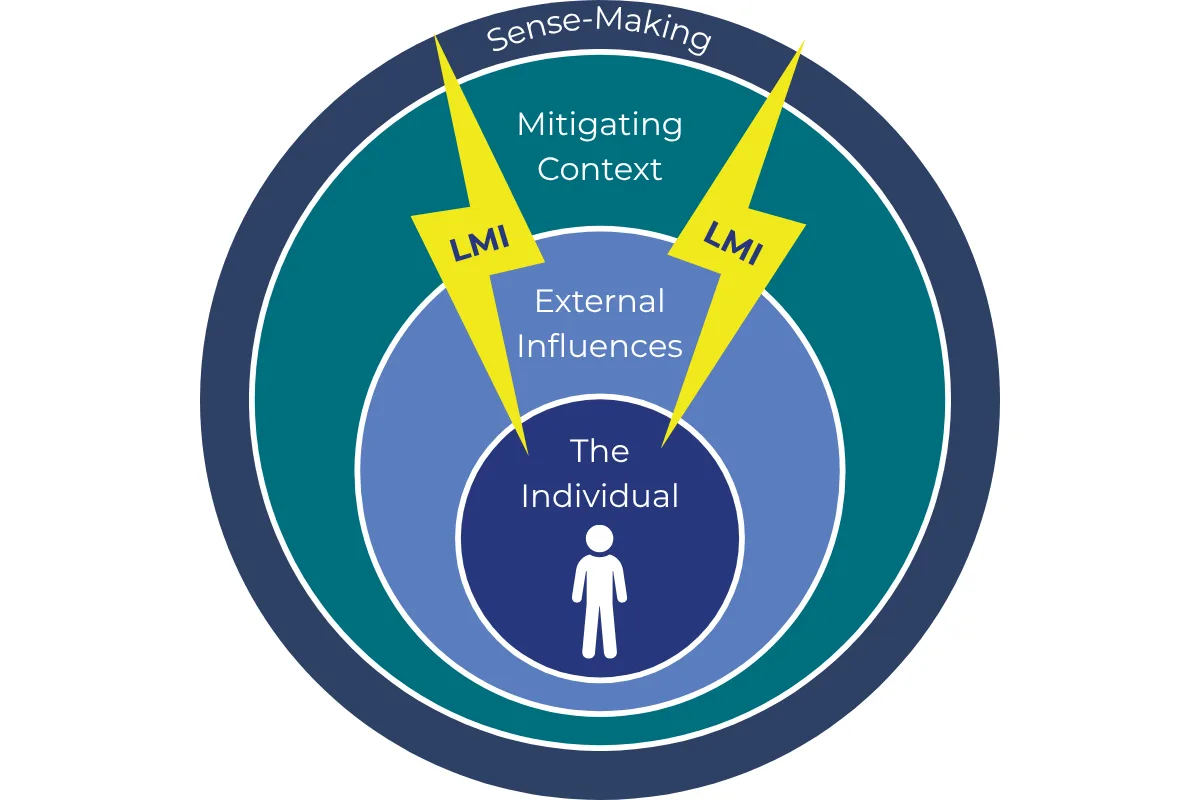
Ultimately, LMI supports clients in moving toward action, empowering them to make decisions with greater confidence and less ambiguity. When integrated thoughtfully by a CDP, LMI becomes a lens through which clients can understand their situation more clearly, see opportunity more broadly, and take purposeful steps toward their preferred futures.
Getting Unstuck
Making career decisions can be emotionally and mentally challenging, leading many to feel paralyzed and stuck. LMI can be a vitally important contributor to helping individuals get unstuck and empowering them to define their preferred future. Clients need access to the specific answers to questions they have about the options they’re considering. Whether it’s the cost of a specific training program, the work culture in a sector they’re considering, working conditions in a job they’re interested in, or the outlook for graduates of a program they may want to pursue, clients need facts upon which to base their career decisions.

LMI is a great source of facts if you know where to look and how to make personal sense of it.
Reflection
Think about your practice. Do you tend to embed LMI within a client’s broader career development needs, goals and action planning – as a means to answer specific questions and inform decision-making and action…or is LMI a bit “external” to your service delivery? Is there anything you want to do more of, less of or differently when it comes to how you integrate LMI into your practice?
Every career development professional needs a library of trusted LMI resources that they can recommend to clients… and needs to be refining that library as new client needs are identified and new sources of LMI are found. LMI should always be tailored to your client’s need.
As you proceed through this course, you will be introduced to formal and informal sources of LMI. Use these to bookmark links to online resources, download and save documents for future use, and build your own toolkit of resources to support your clients, whatever Employability Dimension they are focused on.
