
2: The Labour Market and the Forces that Shape It
The labour market is the system where the demand for labour (employers) and the supply of labour (workers) interact. It isn’t a single place but a constantly shifting environment shaped by multiple forces, including economic conditions, demographic changes, technology, and public policy.
We participate in the labour market through our work and our career decisions, and it directly influences our opportunities and choices. Understanding the labour market helps us navigate our careers more effectively. To function well within the labour market, we need to understand what affects it, how it operates, and the conditions shaping it today.
Eight Key Forces Shaping the Labour Market
While the labour market is sometimes described as a remote entity, in reality it is a dynamic, interconnected system that each of us participates in daily. The jobs we do, the skills we build, the communities we live in, the policies that govern our work, and the technologies we use all interact with one another within our labour market.
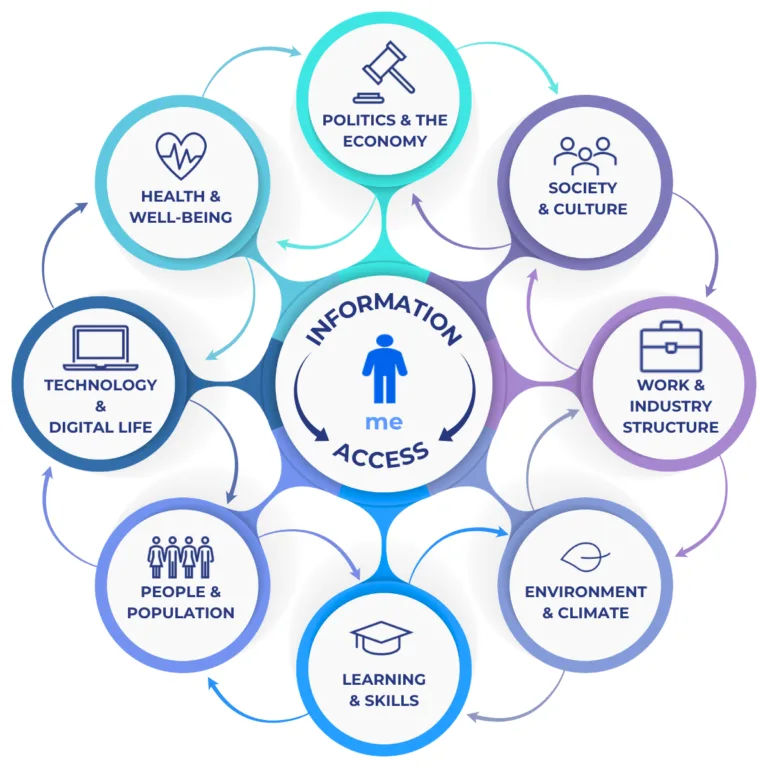
These eight forces act on and influence the labour market in different ways. Sometimes they push in the same direction, and sometimes they pull against one another, creating tension, disruption, or new opportunities.
At the centre of the model is people – us as CDPs and the clients and employers with whom we work. We are influenced by these forces, but we also influence them through the choices we make as workers, learners, consumers, and community members. Contrary to the idea that the labour market is an external force, we are actually at the centre of it.
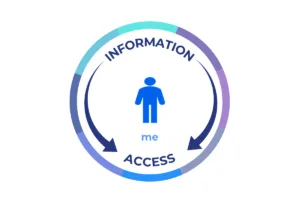
Surrounding us at the centre is information access. To understand the labour market and navigate it effectively, we need access to accurate, relevant LMI. This is key – both to developing our own careers and in our roles as CDPs, helping clients make career sense of, and apply LMI in their career development. If we are to function effectively in today’s labour market, we need to know what impacts it, its current conditions and how it works.
Circling us and our access to information are the 8 forces that influence the labour market. Understanding these, through access to information, enables us to make sense of the labour market and positions us to use LMI effectively.
People & Population
Who we are, where we live, and how our population is changing.
Why this matters:
Changes in population size, makeup, and location affect the supply of workers and the demand for services.
Examples:
- Age of the population (what is the demographic balance between youth, working-age adults, and older workers?)
- Immigration and refugee settlement patterns
- Indigenous population growth
- Workforce participation rates (e.g., women returning to the workforce, older adults working longer)
- Multigenerational households and changing family sizes
- Urban vs. rural population shifts

Learning & Skills
How people gain the knowledge, skills, and qualifications they need for work.
Why this matters:
Education and training systems help people prepare for work, adapt to changes, and keep learning throughout their careers, affecting the extent to which there is alignment between the skills of potential workers and the skills needed in the labour market.
Examples:
- Public and private education systems
- Colleges, universities, and trade schools
- Apprenticeships and co-op programs
- Lifelong upskilling and reskilling
- Recognition of foreign credentials (FQA) and prior learning (PLAR)
- Industry–education partnerships
Politics & the Economy
How governments, policies, and economic trends affect jobs and industries.
Why this matters:
Political decisions and economic conditions influence wages, employment, and industry growth or disruption.

Examples:
- Inflation and cost of living
- Interest rates and borrowing costs
- Government budgets and public spending
- Trade agreements and tariffs
- Tax policies and incentives
- Living wage and minimum wage laws
- Economic recovery plans
- Global supply chain shifts
- Regional development programs

Society & Culture
How public values, beliefs, and behaviours shape what’s in demand.
Why this matters:
What people care about, how they live, and how they see the world influence industries, products, and services.
Examples:
- Diversity, equity, and inclusion movements
- Mental health awareness and destigmatization
- Generational differences in work values
- Changing family structures and caregiving needs
- Online communities and digital culture
- Consumer activism and ethical purchasing
- Work–life balance priorities
- Public awareness campaigns (e.g., healthy eating, anti-smoking, environmental protection)
Work & Industry Structure
How jobs and industries are organized and change over time.
Why this matters:
Some industries grow, others shrink, and new ones emerge. As these changes occur, job classifications and career paths change along with them.

Examples:
- Decline in certain manufacturing roles
- Gig and platform work (Uber, Fiverr, DoorDash)
- Hybrid and remote roles
- New occupational classifications
- Unionization in emerging industries
- Multi-skilled job requirements
- Shifts between full-time, part-time, and contract work
- Creation of new job titles in tech, sustainability, and healthcare

Technology & Digital Life
How new tools, machines, and digital systems change the way we work.
Why this matters:
Technology and its evolution heavily influence labour markets in everything from how we connect to how we produce goods and deliver services.
Examples:
- Artificial intelligence and machine learning
- Automation and robotics
- Cyber security and data privacy
- E-commerce and digital marketplaces
- Remote/hybrid work technology
- Cloud computing and big data
- 3D printing and advanced manufacturing
- Augmented reality (AR) and virtual reality (VR) in training and work
Environment & Climate
How the natural world and our use of resources shape work.
Why this matters:
Environmental changes and resource management affect industries, regulations, and job demand.

Examples:
- Climate change impacts (flooding, wildfires, extreme weather)
- Environmental regulations and standards
- Renewable energy adoption
- Sustainable agriculture and fishing practices
- Circular economy models
- Green building design and retrofits
- Disaster response and recovery jobs
- Water and resource conservation technologies

Health & Well-being
How physical and mental health shape workforce needs and conditions.
Why this matters:
The health of the population affects which jobs are needed, how workplaces operate, and what supports workers require.
Examples:
- Public health crises (e.g., COVID-19)
- Workplace safety standards
- Occupational health programs
- Access to healthcare and wait times
- Mental health support services
- Ageing population healthcare needs
- Disability inclusion and workplace accommodations
The purpose of the model is to ground you in an understanding of the labour market and how it functions. It provides a flexible foundation for accessing and understanding LMI.
The model is not linear
The forces don’t operate one after the other — they’re all happening at the same time.
The forces are interconnected
A shift in one almost always impacts the others. For example, new technology (Technology & Digital) can change which skills are in demand (Learning & Skills), create mental health challenges (Health & Well-being), and disrupt traditional industries (Work & Industry Structure).
The forces are always changing
Population trends, political priorities, cultural values, and even the climate are constantly evolving.
People are at the centre
We aren’t just shaped by these forces — we also shape them. Our choices as workers, learners, consumers, and citizens influence how the labour market develops.
The 8 Forces model is an important reminder that there are multiple influences on the labour market. Having this model enables you to pull out relevant information about the labour market as you listen to the news, read headlines, or engage in conversations about what’s going on in the world around you. Events we can see all around us (and others which may be harder to spot) are affecting/reflecting these forces and, continuously influencing supply and demand, the composition of the labour force, unemployment rates, growth sectors and opportunity.
