A successful career development sector leader/manager recognizes that the impact of career development extends beyond the individual to include families, communities, and the broader economy. They excel in coaching and mentoring staff, helping them develop skills and progress in their own careers and are committed to continuous program and resource improvement. A 2024 sector mapping study, led to the development of this Career Development Manager/Leader Competency Framework that outlines the competencies needed to be an effective manager or leader in the career development sector. This framework is intended to guide and empower current and aspiring leaders in their professional journey. It was developed by a team of career development experts, building on existing relevant frameworks. Read more here:
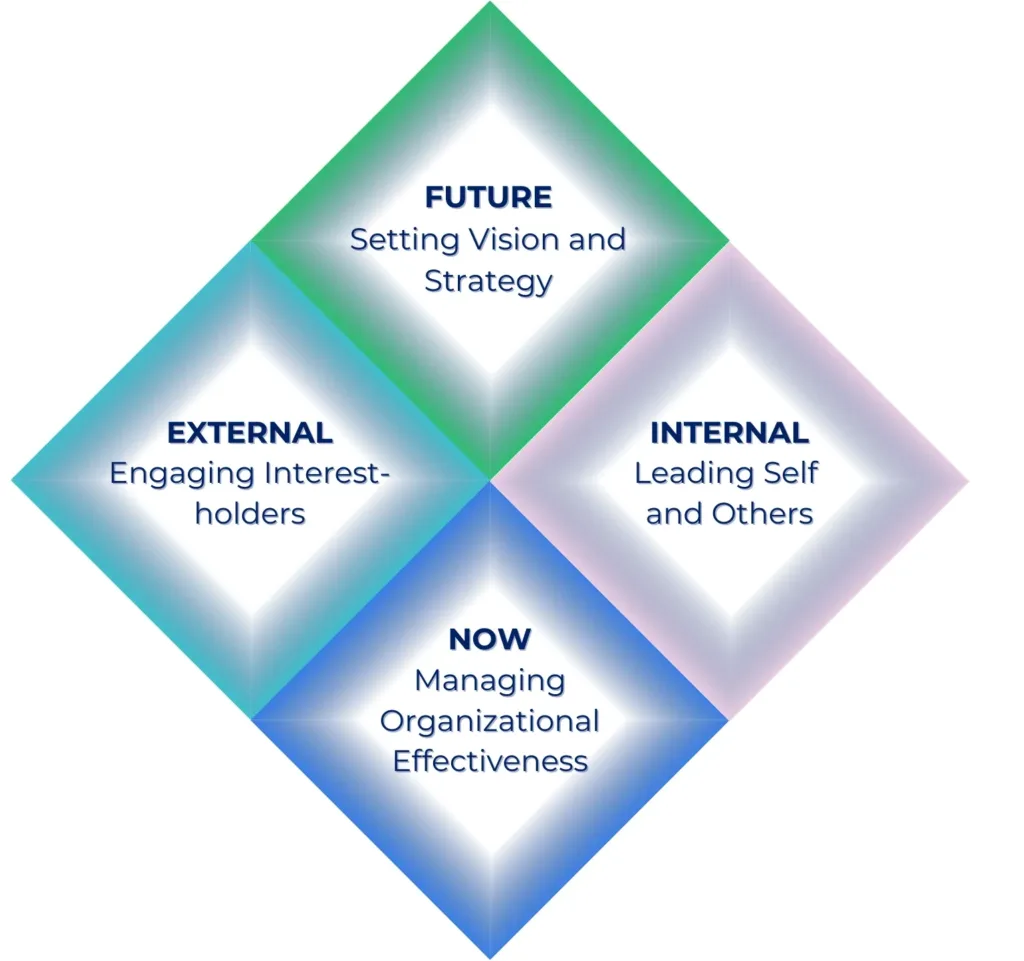
The role of the manager in the career development sector is complex, involving a wide range of competencies that combine and re-combine in many ways. The following four-part model organizes the full range of managerial competencies included in the framework. The model recognizes that the manager/leader’s role must look to the future while ensuring organizational effectiveness now. It also acknowledges that the manager/leader needs to engage with others external to their team as well as those within the team, including themselves.
A description of the full structure and components of the whole competency framework follows. To go immediately to the framework, click here.
The framework groups individual competencies into four Areas of Competence – Setting Vision and Strategy, Managing Organizational Effectiveness, Engaging Others, and Leading Self and Others. These areas represent the key abilities needed to succeed in management or leadership, while also recognizing that the areas overlap with each other.
Managers who can set vision and strategy:
Those who effectively manage organizational effectiveness ensure:
Managers engage with others, such as their leaders, other managers, funders, and client groups, to:
Leading self and others enables managers to:
| Areas of Competence | Categories of Competence |
| A. Setting Vision and StrategyTo set the direction towards which the efforts of the team converge, identify and understand the opportunities, challenges, and risks that can influence the internal and external environments of the organization. The team understands the internal and external contexts in which the organization operates and is governed. To strategically influence decision-making and enhance one’s agency. | A1. Setting direction, considering context, and thinking strategically |
| B. Managing Organizational EffectivenessTo effectively drive organizational success by setting clear direction, aligning team activities with strategic objectives, and making decisions that deliver results. Through planning and efficient resource management, ensure tasks are executed within defined constraints while exercising control over operations and finances. Balancing customer needs with organizational capabilities and ensuring quality service delivery that achieves outcomes. | B2. Defining effective service |
| B3. Planning and management of resources | |
| B4. Problem solving and decision making | |
| C. Engaging OthersTo communicate effectively and tactfully with a variety of interest-holders. To foster and nurture relationships with diverse interestholders. | C5. Engaging others |
| D. Leading Self and OthersTo build and sustain a high-performing workforce, including recruitment, development, and retention of talent while fostering engagement, collaboration, and professional growth within the team. By navigating change effectively and upholding integrity and organizational values, leaders can create an environment that empowers individuals and drives collective success. | D6. Mobilizing talent |
| D7. Managing change | |
| D8. Demonstrating integrity |
Individual Competencies are the specific behaviours, skills, knowledge, or attitudes that a manager or leader is expected to demonstrate in their role. These are sorted within the eight Categories of Competence.
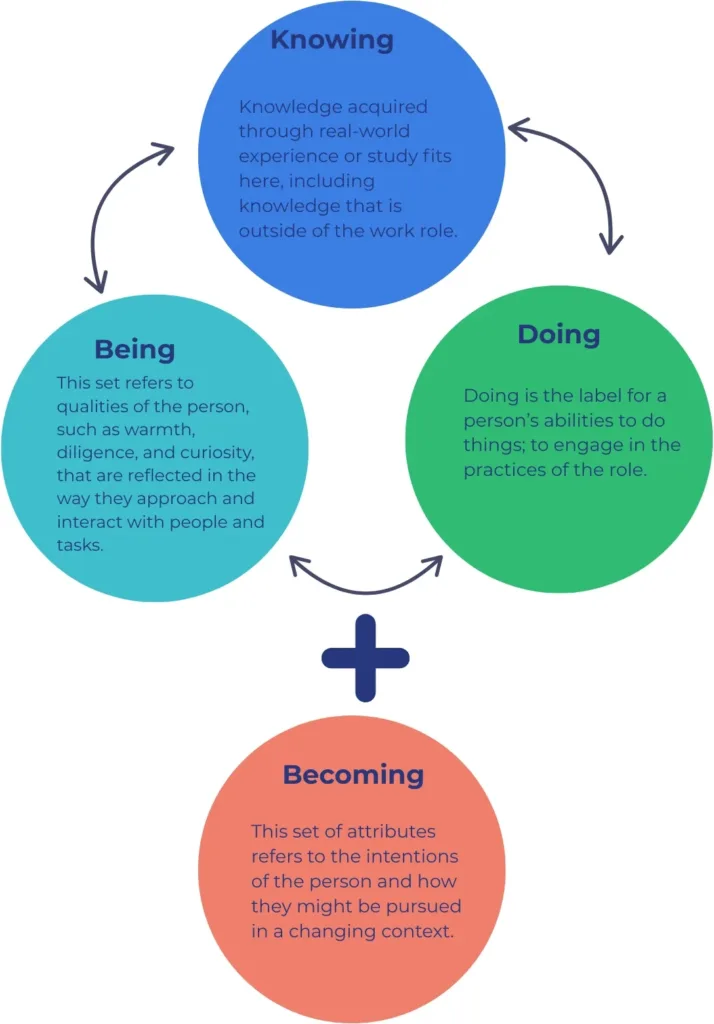
You are much more than a collection of competencies; you come to work as a whole person, as do your team members. A way of thinking about abilities with this lens has been developed by the Université de Sherbrooke. The model below describes a collection of attributes that people bring to their roles, attributes that include much more than just specific competencies.
The sets of attributes in this model include: