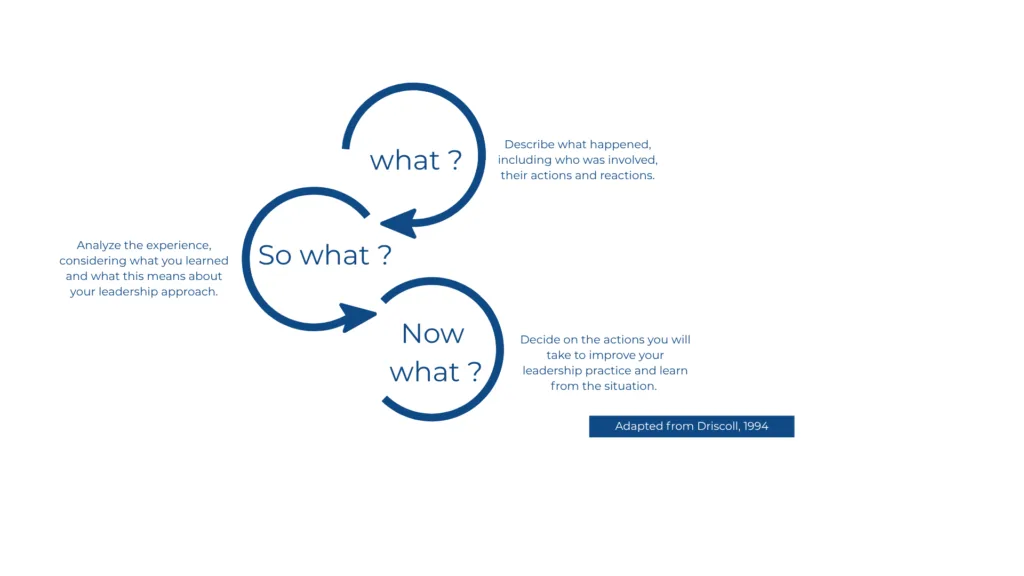
Reflective practice is a thoughtful and deliberate activity where we pause to consider our experiences and actions with the goal of developing better ways of thinking and behaving. By examining our actions, beliefs, and emotions, and how they shape our choices, we can foster both personal and professional growth.
Reflective practice usually has three main steps. Although these seem linear, reflective practice is ongoing so try to consider this a circle.
There are many ways to do reflective practice. This short overview of what it is, why it matters, and how it works is just a starting point.
We can reflect on our practice in two main ways: while an experience is happening or after the fact. This is also known as the “reflection in/on action” framework, which was originally developed by Donald Schön.
You might be thinking: “Sounds nice, but I have a full workload as is! I don’t have time for reflective practice!” Research shows that the time you invest in this practice pays off in the long term.
Reflective practice helps us identify and appreciate positive experiences and identify ways to improve our leadership practice. It can also support us through more challenging experiences, helping to process and learn from them. Here are other benefits to reflective practice:
Using a model to structure your thinking can help you get the most out of your reflection. The “What?” (Driscoll, 1994) model is one of the simplest frameworks for reflection. Here, reflection is guided by three activities, as shown in the image: